In HP Lovecraft's tale The Shadow Over Innsmouth , the protagonist, while visiting the town, has conversations with two NPC's: the grocery boy at the First National and Zadok Adams, the ancient town drunk. I bring these up as examples of two types of NPCs characters can interact with and of the information that can be gathered from each.
While visiting the nation's capital after Labor Day, I was working on a way to model NPC interactions for solo play. Traditionally, the party needs to ask the correct questions of the DM in order to gain information. In solo play, the option is either the proverbial Chinese Wall inside your head or develop a way to model asking the questions. Naturally, I chose to try to model it. I wasted a lot of time building random tables based on my solo play milieu, Castle of the Mad Archmage before I realized that not only are there only six questions, but there are two types of
NPCs.
The six questions, as we should have learned in about fourth grade or at least in Journalism 101, are Who, What, Where, When, Why and How. Obviously, these six basic questions have a near infinite number of permutations, but they can be used to categorize the type of information the NPC imparts.
Who - Personal information, such as the true name of the wizard.
What - Consequences. What happens if I assemble the Puzzle Door?
Where - Location, for example, of the temple of Orcus.
When - Time of occurance
Why - History of an object, location or person hat explains their existence or motivation.
How - Activation words for wands or methods to get past three headed dogs.
Modeling a conversation isn't just about which of the questions can be answered, unless of course, the part has captured an NPC and are interrogating them. Instead both sides have agendas, or topics that they want to discuss. For the party, it is getting answers to the questions, but the NPCs are usually interested in other things. And this leads into categorizing NPCs.
Two Kinds of NPCs
Broadly and with an acknowledged overlap in definitions, NPCs either reside in the dungeon or outside of it. Having said that, NPCs are by nature mobile and where the encounter occurs does not necessarily dictate the kind of NPC encountered.
NPCs living inside the dungeon (iNPCs) can usually answer more of the questions and in greater detail than those living outside the dungeon. When the party interacts with an iNPC for the first time, the iNPC's primary agenda is almost always getting rid of these heavily armed intruders who just showed up to chat. That's not saying that they're going to make the party's attempt to get information easy, the iNPCs will always present their knowledge to protect themselves and if possible harm their rivals. One group of orcs might tell the party truthfully that they can access the next level down a certain way, but not volunteer that they'll be traversing another group's territory. After all a fight between the party and the other orcs will at least soften up the rival group.
NPCs living outside the dungeon, or to borrow a term from the Army, Rear Echelon NPCs (RENPCs) tend to possess less detailed information and their main concerns have nothing to do with the dungeon. Examples of RENPCs are innkeepers, clerics and merchants the party obtains goods and services from. They may have gained incidental information from other groups of adventurers, but it's not central to their lives.
Talking to Zadok
To illustrate these concepts, lets go back to Zadok and the Grocery Boy in Innsmouth. The dungeon is the town of Innsmouth, which observant readers will note is where both of the NPCs are encountered. Yet the Grocery Boy is a RENPC, as I said the categories are broad and location does not determine the kind of NPC encountered. The first thing the protagonist learns from the Grocery Boy is the topic the Grocery Boy feels is most important. He's not from Innsmouth, he rooms with a family from Ipswich and he only lives there because of the job. Afterward he imparts information the protagonist actually wants.
Where - a sketch map of the town and locations to be avoided.
Who - Zadok Adams, the 94 year old town drunk can give more detailed information
How - get Zadok liquored up and he'll talk
Old Zadok is an iNPC, having grown up in Innsmouth and witnessed it's transformation to a place of horror. As he's a counter-culture rebel within the town, (and the protagonist is only armed with bootleg whisky) he's not trying to get rid of the protagonist right away. After a couple of blown Gather Information skill checks on the part of the protagonist, Zadok finally provides a lot of information.
Who - Obed Marsh, sea captain and wizard
What - Summoned and made a pact with the Deep Ones that ended up with half the town being killed off.
Where - Devil's Reef, visible at the mouth of the harbor is where human sacrifices take place
When - Obed encountered the Deep Ones in the Pacific in the 1830's and took over the town in 1844.
Why - To obtain gold for himself and good fishing for the town initially. Later for the promise of immortality for his descendants.
How - Throwing a carved lead tablet into the deep waters off of Devils Reef summoned the Deep Ones
Obviously, having a single NPC that could provide the entire back story was a plot device for HPL, but this still illustrates the difference in the breadth and depth of knowledge available to NPCs. In my next post I'll detail the system, based on Mythic , which I will be using for solo play.

Thoughts on Role Playing Games and possibly beer.
Friday, September 12, 2014

Thursday, August 28, 2014
The DM as the Font of All Knowledge
It's axiomatic that the DM is responsible for describing their world to the player characters. And it's an area where I've seen many DMs, including myself, struggle for consistency.
When I examine the first sentence I wrote, which I doubt any one disagrees with, I see that one of the reasons I've struggled with consistency is the way I've traditionally phrased it. Looking at it the way I would look at a business requirement for designing an application, my response to the author would be, "OK, so what? You haven't actually provided any requirements, just a vision statement. A good requirement is when X occurs do Y, all you have given me is the Y." So that gives me a starting point for my analysis, define the Xs, i.e. what occurs during play that triggers the DM to communicate with the player characters.
First and foremost is describing the environment in response to character actions. They open the door what do they see? Do they find the secret door? What monster is trying to melt their faces? The answers to environmental questions are handled by the mechanics of the game and only need a little fleshing out. 'It's a 10x10 room' is a boring description, fleshing it out to 'it's a 10x10 room with a water stain in the far left corner' can be done on the fly or set up in advance with any number of random dungeon dressing tables. Fleshing out descriptions adds depth to the narrative and engages the players' interest. Similarly, you should avoid 'You found a secret door', instead let them find the trigger, but describe it in a way that keeps the players in suspense while prompting them to on what actions are available. 'You found a hole the size of your finger in the wall, are you going to poke it?' If they respond, 'I'm checking it for traps', the response could be 'The back of the hole gives way to your probe with a click, and a section of the wall slides open' or you might say, 'There's a snap and your probe comes out shorter than it went in'.
The second trigger actually occurs first, background information and house rules at the start of the adventure. Sometimes derogatorily referred to as 'fluff';background information provides the players with common knowledge the characters are expected to have - like when the society has a penchant for burning witches,informs the players of the initial goals the DM is prepared for the characters to pursue and may assist the players in developing motivations for their characters. The actual amount of background information may be limited to "I'm going to run a meat grinder funnel. Roll up a dozen characters and we'll see who survives." On the other hand, the background information on Forgotten Realms runs to hundreds of pages, not counting the hours of semi-canonical game play.Even when I run a campaign set in the Realms, I provide information on the starting area and any character restrictions. I also make sure to provide a teaser of what the first adventure will be, after all I don't want the players to expect a standard dungeon crawl if I'm preparing to have them doing second story work in the city. In regard to house rules, I try to start by accepting anything from the core rule set (regardless of system), but splat book additions need my approval on a case by case basis. I've seen some discussions on the RPGBA boards about "safe words" and codes of conduct this year; neither of which has a place at my table. If your character is an a-hole, it's my responsibility to deal with it in game. If you are an a-hole, I'll let you know and I expect you to feel free to inform me when I am one. If you are too fragile a blossom to speak up for yourself,don't sit down at my table.
The third trigger for DM communications is PC interactions with NPC's, whether it's the barkeep or the goblin guarding the cage, this is where the term role playing comes from. I do find it hard to do characters and I need to improve prompting my players to be in character themselves during these interactions. When the roles are stripped out of the interactions, I find a lot of the fun of the game goes away too. As far as the types of information NPCs impart traditionally it has been rumors, but John Arendt over at Dreams in the Lich House had a couple of good posts on Campaign Events last month. I like the idea of using campaign events to give the world a feel that there is more than just the town and dungeon and that the characters are not necessarily the biggest fish in the pond. As far as rumors, well that's a topic for another post as there is a lot that can be done with them.
When I examine the first sentence I wrote, which I doubt any one disagrees with, I see that one of the reasons I've struggled with consistency is the way I've traditionally phrased it. Looking at it the way I would look at a business requirement for designing an application, my response to the author would be, "OK, so what? You haven't actually provided any requirements, just a vision statement. A good requirement is when X occurs do Y, all you have given me is the Y." So that gives me a starting point for my analysis, define the Xs, i.e. what occurs during play that triggers the DM to communicate with the player characters.
First and foremost is describing the environment in response to character actions. They open the door what do they see? Do they find the secret door? What monster is trying to melt their faces? The answers to environmental questions are handled by the mechanics of the game and only need a little fleshing out. 'It's a 10x10 room' is a boring description, fleshing it out to 'it's a 10x10 room with a water stain in the far left corner' can be done on the fly or set up in advance with any number of random dungeon dressing tables. Fleshing out descriptions adds depth to the narrative and engages the players' interest. Similarly, you should avoid 'You found a secret door', instead let them find the trigger, but describe it in a way that keeps the players in suspense while prompting them to on what actions are available. 'You found a hole the size of your finger in the wall, are you going to poke it?' If they respond, 'I'm checking it for traps', the response could be 'The back of the hole gives way to your probe with a click, and a section of the wall slides open' or you might say, 'There's a snap and your probe comes out shorter than it went in'.
The second trigger actually occurs first, background information and house rules at the start of the adventure. Sometimes derogatorily referred to as 'fluff';background information provides the players with common knowledge the characters are expected to have - like when the society has a penchant for burning witches,informs the players of the initial goals the DM is prepared for the characters to pursue and may assist the players in developing motivations for their characters. The actual amount of background information may be limited to "I'm going to run a meat grinder funnel. Roll up a dozen characters and we'll see who survives." On the other hand, the background information on Forgotten Realms runs to hundreds of pages, not counting the hours of semi-canonical game play.Even when I run a campaign set in the Realms, I provide information on the starting area and any character restrictions. I also make sure to provide a teaser of what the first adventure will be, after all I don't want the players to expect a standard dungeon crawl if I'm preparing to have them doing second story work in the city. In regard to house rules, I try to start by accepting anything from the core rule set (regardless of system), but splat book additions need my approval on a case by case basis. I've seen some discussions on the RPGBA boards about "safe words" and codes of conduct this year; neither of which has a place at my table. If your character is an a-hole, it's my responsibility to deal with it in game. If you are an a-hole, I'll let you know and I expect you to feel free to inform me when I am one. If you are too fragile a blossom to speak up for yourself,don't sit down at my table.
The third trigger for DM communications is PC interactions with NPC's, whether it's the barkeep or the goblin guarding the cage, this is where the term role playing comes from. I do find it hard to do characters and I need to improve prompting my players to be in character themselves during these interactions. When the roles are stripped out of the interactions, I find a lot of the fun of the game goes away too. As far as the types of information NPCs impart traditionally it has been rumors, but John Arendt over at Dreams in the Lich House had a couple of good posts on Campaign Events last month. I like the idea of using campaign events to give the world a feel that there is more than just the town and dungeon and that the characters are not necessarily the biggest fish in the pond. As far as rumors, well that's a topic for another post as there is a lot that can be done with them.
Tuesday, August 26, 2014
Gearing Up
The Marine returned from his five years in the Corps in April and has now moved back out, this time to scenic Grand Forks ND for school. Thank those of you who are taxpayers for footing yet another college education, this time commercial pilot with a side of air traffic controller. (They have a world class aviation program up there).
The meaning of that for my blogging is that I have my home office back and more time for writing and playing in 'my space' in the house. I've decided to convert my Epirus Nova campaign from 1e to ACKS; especially as I left it at essentially a TPK. Also for the dungeon I decided to use the inestimable +Joseph Bloch 's Castle of the Mad Archmage for the delvings. I'll change some of the details to match the pseudo-Classical setting; for example the artifact on Level Seven, room 41 goes known as "Gregor's Little General" to the "Stragtegion of Phillip".
The last time I did a solo play, I ran it with a mixture of Mythic and 1e random encounters as they looked for the Keep on the Borderlands. I liked the variability that Mythic offered, but wasn't enthralled by running bare encounters. This time I'm working on a different approach, I'll still use Mythic for variability, but will structure the play more like I would if I was running an adventure, with a definite beginning and end to each expedition. The standard flow can be diagrammed like this.
Back story is just character creation, of course as characters meet their various grisly demises, it become an ongoing function of game play.
Adventure is the goal the party is trying to accomplish - and probably a weak area for me as a DM is in setting goals for the party. It does impinge on the question of player and character agency, but the GM at least needs to offer initial guidance on what goals can be.
Outfitting: Buying crap to meet anticipated threats. This is also where the characters interact with NPCs and have a chance to learn things the easy way. So I'm working on methods to determine what kind of information the player can get about the dungeon as well as what's happening in the world outside the dungeon.
Encounters: We all know what they are, killing things or role playing opportunities. Killing things is easy in solo play, role playing not so much. Again I need that common method to determine what the party can learn from the NPCs. Encounters are also resource sinks, after each one the party needs to determine if they have sufficient resources to continue the expedition.
Disposing of the loot is the natural end to an expedition, it's another time the party interacts with the NPCs and can learn things other than what size teeth the monster has. It also leads to the question, re-outfit and go back in or chose another goal for the party to pursue.
More to come, hopefully in less than two months.
The meaning of that for my blogging is that I have my home office back and more time for writing and playing in 'my space' in the house. I've decided to convert my Epirus Nova campaign from 1e to ACKS; especially as I left it at essentially a TPK. Also for the dungeon I decided to use the inestimable +Joseph Bloch 's Castle of the Mad Archmage for the delvings. I'll change some of the details to match the pseudo-Classical setting; for example the artifact on Level Seven, room 41 goes known as "Gregor's Little General" to the "Stragtegion of Phillip".
The last time I did a solo play, I ran it with a mixture of Mythic and 1e random encounters as they looked for the Keep on the Borderlands. I liked the variability that Mythic offered, but wasn't enthralled by running bare encounters. This time I'm working on a different approach, I'll still use Mythic for variability, but will structure the play more like I would if I was running an adventure, with a definite beginning and end to each expedition. The standard flow can be diagrammed like this.
 |
| Adventure Flow |
Adventure is the goal the party is trying to accomplish - and probably a weak area for me as a DM is in setting goals for the party. It does impinge on the question of player and character agency, but the GM at least needs to offer initial guidance on what goals can be.
Outfitting: Buying crap to meet anticipated threats. This is also where the characters interact with NPCs and have a chance to learn things the easy way. So I'm working on methods to determine what kind of information the player can get about the dungeon as well as what's happening in the world outside the dungeon.
Encounters: We all know what they are, killing things or role playing opportunities. Killing things is easy in solo play, role playing not so much. Again I need that common method to determine what the party can learn from the NPCs. Encounters are also resource sinks, after each one the party needs to determine if they have sufficient resources to continue the expedition.
Disposing of the loot is the natural end to an expedition, it's another time the party interacts with the NPCs and can learn things other than what size teeth the monster has. It also leads to the question, re-outfit and go back in or chose another goal for the party to pursue.
More to come, hopefully in less than two months.
Friday, June 27, 2014
What I've been reading
Not really a Book Report, but I finally updated my current reading links, As I posted below, NPCs is definitely recommended reading for the gaming crowd. I read The Worm Ouroboros with every intention of doing a book report on a classic in the Fantasy genre, but frankly it's all potential and no delivery to me. (I know heresy to some.)
I recently finished Theodor Mommsen's A History of Rome, Mommsen being the dean of the 19th century German Latin scholars. I really should do a formal write up on it, but in the mean time, I need to add it to Appendix N. It's an important resource for anyone doing a Classical campaign.
In the meantime, I've started Victor Davis Hansen's Ripples of Battle, on the recommendation of the recently discharged Marine. Anything by VDH is worth reading, in particular for wargaming and understanding of how non-European's have viewed conflict, I recommend his Carnage and Culture.
I recently finished Theodor Mommsen's A History of Rome, Mommsen being the dean of the 19th century German Latin scholars. I really should do a formal write up on it, but in the mean time, I need to add it to Appendix N. It's an important resource for anyone doing a Classical campaign.
In the meantime, I've started Victor Davis Hansen's Ripples of Battle, on the recommendation of the recently discharged Marine. Anything by VDH is worth reading, in particular for wargaming and understanding of how non-European's have viewed conflict, I recommend his Carnage and Culture.
Tuesday, June 24, 2014
Book Report -NPCs
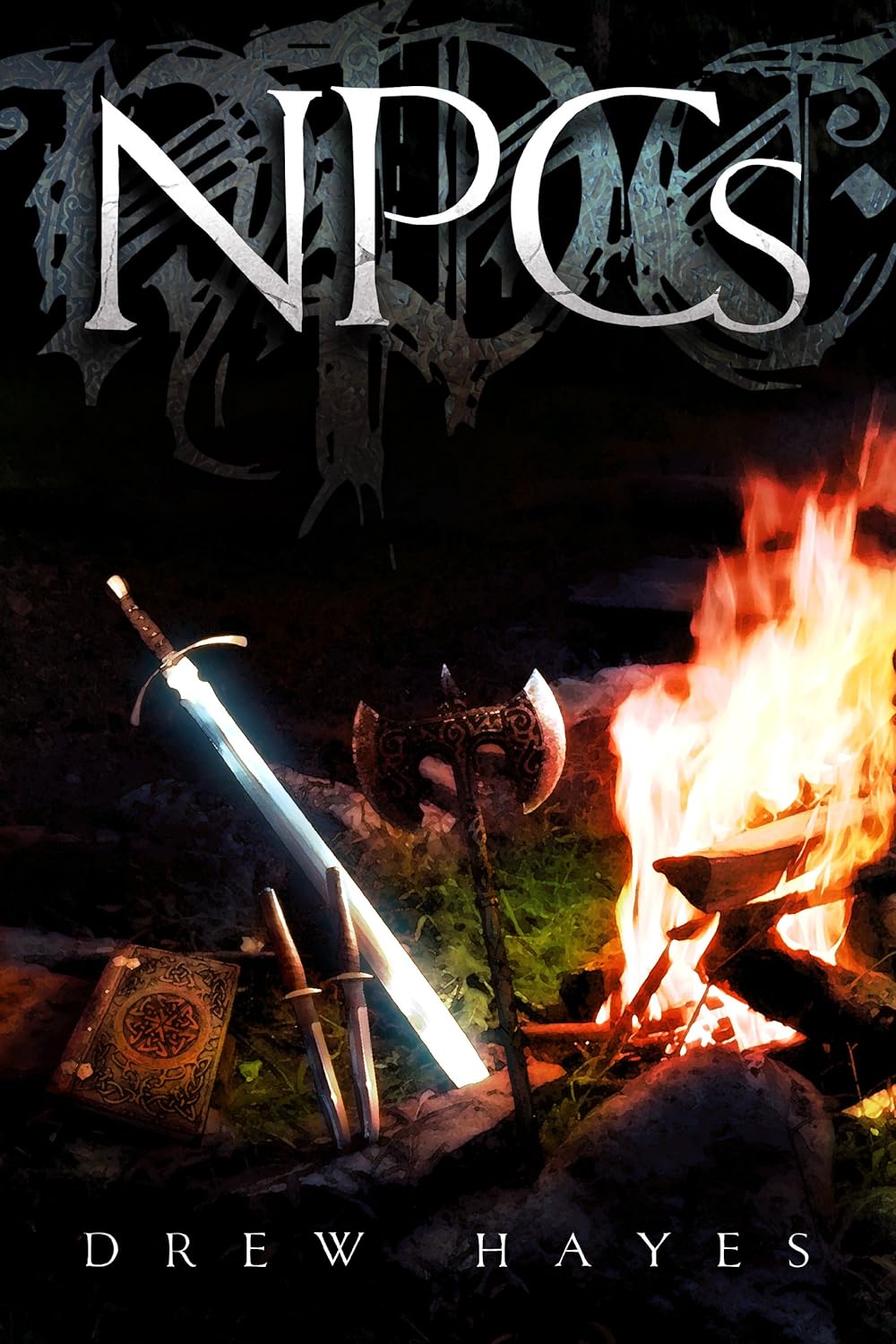
Picked up the ebook from Amazon over the weekend. The story starts in the genre of the original D&D novel, Andre Norton ' s Quag Keep, where in players are transported to the fantasy world of their characters. But in this case they quickly poison themselves and all die in the first tavern they come to.
Unfortunately, for the main characters of the story, the PCs had been tasked by the local Mad King to report in for a little job he needed to have done. The Mad King being notoriously indiscriminate about who he has killed when he doesn't get his way, the heroes decide to impersonate the dead party to save their villlage.
The story is well written, the characters are believable and they develop during the course of the story. The insight on how NPCs see and interact with adventurers is refreshingly unique. The action scenes are well paced and the comment on treating royalty like toddlers made me laugh out loud. To be honest, the author does a better job of writing than Andre freaking Norton did with the same theme.
And Grumble, the diety of minions everywhere, should be added to your pantheons immediately.
Five skulls on this one.
Unfortunately, for the main characters of the story, the PCs had been tasked by the local Mad King to report in for a little job he needed to have done. The Mad King being notoriously indiscriminate about who he has killed when he doesn't get his way, the heroes decide to impersonate the dead party to save their villlage.
The story is well written, the characters are believable and they develop during the course of the story. The insight on how NPCs see and interact with adventurers is refreshingly unique. The action scenes are well paced and the comment on treating royalty like toddlers made me laugh out loud. To be honest, the author does a better job of writing than Andre freaking Norton did with the same theme.
And Grumble, the diety of minions everywhere, should be added to your pantheons immediately.
Five skulls on this one.

Friday, June 13, 2014
Firearms in Fantasy Campaigns IIIa - Updates
Need to revisit these as I've had a request for a gunslinger character from my group.
Based on comments from the previous post, here are my revised Home Rules. The basic change is that I'm now using a formula to determine the KE brackets for each die of damage. Size of damage bracket in KE = Cumulative sum (Damage Dice) *64. So the first damage bracket is Cumulative Sum (1) * 64 = 64 KE. As I said in the previous post, I centered it on the KE of an clothyard shaft (64); so the range is 33-96. For the second damage bracket it is (Cumulative Sum (1,2))*64 = 128; third bracket range is (Cumulative Sum (1,2,3))* 64 or 384. This has the effect of slowing the damage progression, modeling the ability of firearm projectiles to penetrate completely through the body without transferring all of their KE to the victim.
To Hit
Firearms are ranged weapons and attack accordingly. The following special rule is used to model grazing shots. Attack rolls between Target AC -2 and Target AC +2 are grazing shots and do 1d3 point of damage. Attack rolls greater than Target AC +2 do full damage. For example, if the target in chainmail (AC 16) is shot at with a Wheellock pistol, attacks of 14-18 will graze the target and do 1d3 points of damage. Attacks greater than 17 would do 1d6+1d4 damage. A natural 20 always does full damage, regardless of the target AC.
Critical Hit Multiplier
Pistols and Handgonnes have a multiplier of 3; rifles and muskets have a multiplier of 4.
Knockdown -getting hit by a bullet involves the transfer of a lot of energy into a bag of flesh, often that will be enough to knock the victim off of their feet. As was pointed out in the previous comments, rarely do bullets actually knock a person down in real life. However, getting struck by a high speed projectile does have an effect. To wit the character may take time to see if any important bits are missing, save as follows. For Pathfinder, if the damage from a single round exceeds the victims CMD. they lose a turn. For 3.x they will make a Fortitude save DC = damage or lose a turn. For 1e Save vs Paralyzation or lose a turn.
Massive Damage for all systems, I'll use a variation of the d20 Massive Damage rule. If the damage exceeds 50 points (and you're still alive) Fortitude save DC (15+ damage/10) or die.
Previous Firearms posts
Firearms in Fantasy Campaigns III - Damage
Firearms in Fantasy Campaigns II - Technology by Era
Firearms in Fantasy Campaigns I
Based on comments from the previous post, here are my revised Home Rules. The basic change is that I'm now using a formula to determine the KE brackets for each die of damage. Size of damage bracket in KE = Cumulative sum (Damage Dice) *64. So the first damage bracket is Cumulative Sum (1) * 64 = 64 KE. As I said in the previous post, I centered it on the KE of an clothyard shaft (64); so the range is 33-96. For the second damage bracket it is (Cumulative Sum (1,2))*64 = 128; third bracket range is (Cumulative Sum (1,2,3))* 64 or 384. This has the effect of slowing the damage progression, modeling the ability of firearm projectiles to penetrate completely through the body without transferring all of their KE to the victim.
| Range/Representative Weapons [KE] | KE | Base Damage | Damage Range (Min-Avg-Max) |
|---|---|---|---|
| 0-96: 1 die damage Arrow(Clothyard shaft) [64] Handgonne - medium [71] Handgonne - short [92] | 0-16 | 1 | 1-1-1 |
| 17-32 | 1d2 | 1-1.5-2 | |
| 33-54 | 1d4 | 1-2.5-4 | |
| 55-75 | 1d6 | 1-3.5-6 | |
| 76-96 | 1d8 | 1-4.5-8 | |
| 97-224: 2 dice damage Prussian Dryese Needle Gun [99] Wheellock Pistol [102] 1851 Colt 'Navy' Revolver [125] Flintlock Pistol (Thompson)[146] | 97-139 | 1d6+1d4 | 2-6-10 |
| 140-182 | 2d6 | 1-7-12 | |
| 183-224 | 1d6+1d8 | 1-8-14 | |
| 225-480: 3 dice damage Matchlock Musket [229] Colt .45 M11911A1 [369] | 225-310 | 2d6+1d4 | 3-9.5-16 |
| 311-395 | 3d6 | 3-10.5-18 | |
| 396-480 | 2d6+1d8 | 3-11.5-20 | |
| 481-928: 4 dice damage Handgonne-long [630] | 481-630 | 3d6+1d4 | 4-13-22 |
| 631-779 | 4d6 | 4-14-24 | |
| 780-928 | 3d6+1d8 | 4-15-26 | |
| 929-1632: 5 dice damage Flintlock Musket (Brown Bess) [980] | 929-1163 | 4d6+1d4 | 5-16.5-28 |
| 1164-1398 | 5d6 | 5-17.5-30 | |
| 1399-1632 | 4d6+1dd8 | 5-18.5-32 | |
| 1633-2656: 6 dice damage | 1633-1974 | 5d6+1d4 | 6-20-34 |
| 1975-2315 | 6d6 | 6-21-36 | |
| 2316-2656 | 5d6+1d8 | 6-22-38 | |
| 2657-4064: 7 dice damage M1 Garand [2693] | 2657-3126 | 6d6+1d4 | 7-23.5-40 |
| 3127-3595 | 7d6 | 7-24.5-42 | |
| 3596-4064 | 6d6+1d8 | 7-25.5-44 | |
| 4065-5920: 8 dice damage | 4065-4683 | 7d6+1d4 | 8-27-46 |
| 4684-5302 | 8d6 | 8-28-48 | |
| 5303-5920 | 7d6+1d8 | 8-30-50 | |
| 5921-8288: 9 dice damage | 5921-6710 | 8d6+1d4 | 9-31.5-52 |
| 6711-7499 | 9d6 | 9-32.5-54 | |
| 7500-8288 | 8dd6+1d8 | 9-33.5-56 | |
| 8289-11232: 10 dice damage | 8289-9270 | 9d6+1d4 | 10-35-58 |
| 9271-10251 | 10d6 | 10-36-60 | |
| 10252-11232 | 9d6+1d8 | 10-37-62 | |
| 11233-14816: 11 dice damage M2 Browning .50 MG [13,166] | 11233-12427 | 10d6+1d4 | 11-37.5-64 |
| 12428-13622 | 11d6 | 11-38.5-66 | |
| 13623-14816 | 10d6+1d8 | 11-39.5-68 |
Firearms are ranged weapons and attack accordingly. The following special rule is used to model grazing shots. Attack rolls between Target AC -2 and Target AC +2 are grazing shots and do 1d3 point of damage. Attack rolls greater than Target AC +2 do full damage. For example, if the target in chainmail (AC 16) is shot at with a Wheellock pistol, attacks of 14-18 will graze the target and do 1d3 points of damage. Attacks greater than 17 would do 1d6+1d4 damage. A natural 20 always does full damage, regardless of the target AC.
Critical Hit Multiplier
Pistols and Handgonnes have a multiplier of 3; rifles and muskets have a multiplier of 4.
Knockdown -
Massive Damage for all systems, I'll use a variation of the d20 Massive Damage rule. If the damage exceeds 50 points (and you're still alive) Fortitude save DC (15+ damage/10) or die.
Previous Firearms posts
Firearms in Fantasy Campaigns III - Damage
Firearms in Fantasy Campaigns II - Technology by Era
Firearms in Fantasy Campaigns I
Game Report - That Really Burns Me Up or The Witch Hunter Cometh
Our heroes having spent the night barricaded by the bodies of their foes at the scene of their victory, decided to spend a quiet day within the dungeon; resting and healing. Having successfully cleared out most of the threats, they managed to do so without incident. Then they turned their attention to the bronze panels set in the south wall, depicting various fantastic creatures. They plaques could be slid left or right on recessed tracks and had a hint of conjuration magic.
Mysteriously, the dwarf who had the midwatch, never woke his relief and was missing when the party awoke. (Player out of state). One of the panels showed a manticore, thinking that it was somehow connected to the one they had previously slain the paladin decided to begin with that. Sliding it right, there was a pop and billowing cloud of sulphurous smoke, heralding the appearance of a nine foot tall, vaguely reptilian humanoid with one out sized arm and the other terminating in a spear. ( a Stalker from Infernum) A brief combat ensued as the party put down the unexpected visitor.
Regrouping, they decided that next they would slide the centaur plaque to the left; as the elvish wizard/thief reasoned, the centaur was the only one that might be friendly. (This completely bypassed a major undiscovered clue I had set up, that I was seriously looking forward to running, such is life as a DM). They heard a click and found that a panel had opened in the wall above the plaques, leading to a three by three crawl way.
The elf crawled through to find that he had come out 18 feet up the wall in a large chamber, containing some sort of stone structure and a pit of warm ashes. After some discussion, all of them ended up in the crawlspace, the hired hand refusing to remain behind, belaying themselves in turn down a rope to the floor. None of them thought to pound in a spike, so the hireling, who was last had to jump, insisting that his boss, the elf, be the one to catch him. Let's ust say he didn't stick the landing nearly as much as he stuck the elf on landing.
The stone structure turned out to be a sarcophagus and some tentative stirring of the ashes revealed a humandoid hand embedded therein. Mage Hand was unable to dislogde the hand from the ash pit, so they turned their attention to levering off the lid of the sarcophagus. It fell with a crash to let out a somewhat short and broad mummy armed with a hammer, and wearing studded leather, who had an ioun stone orbiting it's head. Simultaneously, the headless body of a large red skinned humanoid arose from the ashes. The armor turned out to be Armor of Insults Everyone except the Tilean fighter failed their save and started waling on the mummy. Which allowed the headless Djinn to cast a Wall of Fire separating the fighter from the group - and causing serious burns on all of them.
The mummy went down easier than the fighter, but eventually they were both down, with the ranger also in bad enough shape that the paladin was busy healing him. The wizard started casting spells at the Djinn, as the paladin went back through the wall of fire to try to save the fighter. While he drug the fighter's battered body next the wall, the Djinn walked through the Wall of Fire in the direction of the magic user. Plunging back through the fire the paladin raced to put the Djinn down and dispel the Wall of Fire before the fighter died from the continuing heat. Sadly, he failed.
They collected the treasure and corpse and decided to head back to Smalplotz. the hammer was snarky and refused to let any of them wield it, saying "You're not the one that I called."

Mysteriously, the dwarf who had the midwatch, never woke his relief and was missing when the party awoke. (Player out of state). One of the panels showed a manticore, thinking that it was somehow connected to the one they had previously slain the paladin decided to begin with that. Sliding it right, there was a pop and billowing cloud of sulphurous smoke, heralding the appearance of a nine foot tall, vaguely reptilian humanoid with one out sized arm and the other terminating in a spear. ( a Stalker from Infernum) A brief combat ensued as the party put down the unexpected visitor.
Regrouping, they decided that next they would slide the centaur plaque to the left; as the elvish wizard/thief reasoned, the centaur was the only one that might be friendly. (This completely bypassed a major undiscovered clue I had set up, that I was seriously looking forward to running, such is life as a DM). They heard a click and found that a panel had opened in the wall above the plaques, leading to a three by three crawl way.
The elf crawled through to find that he had come out 18 feet up the wall in a large chamber, containing some sort of stone structure and a pit of warm ashes. After some discussion, all of them ended up in the crawlspace, the hired hand refusing to remain behind, belaying themselves in turn down a rope to the floor. None of them thought to pound in a spike, so the hireling, who was last had to jump, insisting that his boss, the elf, be the one to catch him. Let's ust say he didn't stick the landing nearly as much as he stuck the elf on landing.
The stone structure turned out to be a sarcophagus and some tentative stirring of the ashes revealed a humandoid hand embedded therein. Mage Hand was unable to dislogde the hand from the ash pit, so they turned their attention to levering off the lid of the sarcophagus. It fell with a crash to let out a somewhat short and broad mummy armed with a hammer, and wearing studded leather, who had an ioun stone orbiting it's head. Simultaneously, the headless body of a large red skinned humanoid arose from the ashes. The armor turned out to be Armor of Insults Everyone except the Tilean fighter failed their save and started waling on the mummy. Which allowed the headless Djinn to cast a Wall of Fire separating the fighter from the group - and causing serious burns on all of them.
The mummy went down easier than the fighter, but eventually they were both down, with the ranger also in bad enough shape that the paladin was busy healing him. The wizard started casting spells at the Djinn, as the paladin went back through the wall of fire to try to save the fighter. While he drug the fighter's battered body next the wall, the Djinn walked through the Wall of Fire in the direction of the magic user. Plunging back through the fire the paladin raced to put the Djinn down and dispel the Wall of Fire before the fighter died from the continuing heat. Sadly, he failed.
They collected the treasure and corpse and decided to head back to Smalplotz. the hammer was snarky and refused to let any of them wield it, saying "You're not the one that I called."
On return from the tomb to Smålplotz,
there is a letter awaiting Bruce Bucket (the hireling) from Hans Schultz. Bucket was
proudly illiterate ('if you can't read, you can't read no Chaos
doomed books, my pa says') and puzzled why he would receive a letter.
Insidewais another letter with a drawing of a helmeted bearded face
(intended for the dwarf). That letter read:
My
friends,
My
nephew Johann sends word from Bergsberg, a witch hunter is asking
about strangers using magic with some beastmen. He told the hunter
that the only strangers he had seen passing through Hovelhof was the
Fraulein and her companions on their way to Talabheim. It might be a
good idea for you to find a more populous area where the pointies
won't stand out so.
Passing through Hovelhof, Schultz suggested that if they took the Drakwasser from Bergsberg to Altdorf they might gain on or even catch the nun. He also informed them that Bergsberg was home to a large Temple of healing that might be able to raise the fighter.
Going up the Old Forest Road to Bergsberg, they met a large number of Middenhiem troops heading south to combat the Kurgen Horde that chased our heroes out of Wolfenburg at the start of this mess. With a hat firmly pulled down over the elf's ears, they proceeded to the temple of Shallya and in exchange for over half of their ill gotten gains, had the fighter's services as more than an occasional cushion, returned to them. They found a large rowboat for sale and had just set off when a dark figure appeared on the pier. Ignoring his hail, they quickly rowed downstream.
Having been warned about the marshes of Ente Turm, they decided not to investigate the ruins they encountered there. (Foiling my plans for their next adventure, and wasting a lot of my time in putting it together.) They made a relatively uneventful trip to Altdorf, where the paladin went to the Temple of Sigmar to to turn in the manticore's tail as proof that he had completed his quest. While he was waiting for someone important to condescend to see him, the elf investigated transportation to Nuln on the river front and the fighter started checking out the inns and coaching stables looking for news about the nun. This brought the fighter to the attention of one Dietrich Todbringer-Bothner; Witch Hunter and relative of the Todbringer family who rules Middenhiem. and who is also looking for information on the nun for private reasons. It also landed the fighter in the dungeons under the Temple of Sigmar for "more rigorous questioning" . (While I have often enjoyed torturing players, I believe this is the first time I ever tortured a character) using the Tamper with Mortality table from ACKS, we determined that one of his knees was permanently mangled, leaving him with a limp and a maximum speed of 3* base movement.
The paladin showed up at the docks saying he had broken with the order and after a week the fighter was released from the dungeon. The party took passage on a small trading boat going up river to Nuln. Arriving in rain with a cargo of goats, the paladin decided to pay the port authorities to let them land, rather than listen to the argument between the boat captain and the port master or spending a night sleeping with the goats.
A chance met character, they met in a tavern promised them he knew where they could find rooms; instead they were lead into an ambush by some thugs who weren't very competent. Unable to catch surviving thug or their betrayer, they quick left the area before the watch arrived. Finally stumbling on "The Reiver's Return", they found beds in a cramped attic for the night. Carefully barring the door, but not bothering to check the window. The fighter awoke to find someone leaning over him, the would be thief got away but took the fighter's dagger (embeded in his shoulder) with him.
The next day, the paladin went to the locale temples asking about outbreaks of disease, which no one had heard of while the elf and the ranger went to Councillor Oldenhaller's mansion on the eponymous strasse. After checking the seal on the letter and getting the party's version of what happened in Wolfenburg, Oldenhaller revealed that all it said was "Albrecth, They may be of some use. Fanny" and offered them employment in his business of trading objects - no questions asked.
Adjourned, pending the party's decision.
Subscribe to:
Posts (Atom)