-->
Showing posts with label Book Report. Show all posts

Wednesday, April 8, 2020

Real-life Hexcrawl Manual

Randolph Marcy by Matthew Brady,
Courtesy Library of Congress, Public Domain
     About 30 years ago, on a Permanent Change of Station from San Diego to New York City, we traveled via Old Fort Laramie on the Oregon Trail.  Not much left but some foundations being cleared by archaeologists, a nice diorama and a gift shop.  Oh, and the wagon ruts left by travelers over a century in the past.  Have the Polaroid of the boys standing in them somewhere.  My souvenir was a reprint of Captain Randolph Marcy's guidebook The Prairie Traveler - it turned up today when I was looking for something else.

     Captain Marcy was an experienced frontier hand with the pre-Civil War US Army.  In 1859, he published his travel guide for settlers, providing them with information on the routes to the west, practical tips on overcoming obstacles like rivers and broken wagons.  How to tell if the horse tracks were a group on Indians moving their lodges, on a hunting or war party or just wild mustangs, snake-bite remedies, how to pack mules and make a horse stretcher, etc, etc and may I say etc yet again.  In less than 300 pages, with illustrations, he packaged up as much knowledge as he could to keep the migrants alive across the prairie and mountains.

     What catches my eye now, because of some posts I'm working on concerning the Wilderlands trade routes and boundaries, is that he includes itineraries for a number of routes.  Stop by stop distances, descriptions and information about forage, wood and water.  In gaming, most systems assume that overland travel proceeds at a constant rate day over day - and on average you can say that.  However, the rates of movement are based on the speed of the mount or walker, with a multiplier for terrain that increases or more usually decreases the daily movement - generally about 25 miles/day when mounted.  In reading through the actual itineraries, and doing some back of the envelope calculations, I find that the average journey between camping spots was 14-16 miles.  But depending on the availability of forage, wood and water, any given leg of the journey varied between 2 and 52 miles.  In hindsight, it's obvious "Professionals study logistics" - a hexcrawl should  take this into account.

Questions and Notes:
     How accurate are the distances given?  Pre-Civil War West Point education was very civil engineering and land survey oriented.  One of the lessons of the Napoleonic wars that the European militaries had picked up and transmitted in the writings of von Clausewitz and Jominie to America, was the importance of accurate knowledge of the terrain.  Indeed in reading about the Civil War generals, it's remarkable how many of them had left service to work on the railroads where their knowledge was critical in driving the rail lines through as cheaply as possible.

    Horses vs Oxen - he addresses both, as well as mule teams, but the itineraries do not differ based on your choice of draft animals.  Again, the logistics of where you can stop determines how far you will travel, you just might take an hour longer to get there.

    Could an ox team really go over 50 miles in a day?  While that's the first impression, I think it's a bit erroneous.  The itineraries aren't really explained well, almost all of the stops are less than 25 miles apart, 8 hours at 3 MPH pretty much gets you there in a single day.  But in a separate section, he talks about how to cross long distances between campgrounds like the 78 mile Journado del Muerto in New Mexico.  There the journey is done over two nights, there simply isn't any place to camp and there may not be water.  He recommends traveling at night, resting the animals every couple of hours, longer the second night.

Friday, March 8, 2019

Fascinating but flawed.


Anyone doing a historical political or trading game should have this in ther Appendix N.


   A well written account of the foreign trade of the Roman Empire through Egypt and the Red Sea. It explores the products associated with it's trading partners, the difficulties merchants faced in obtaining these products and the internal and external taxation policies effecting foreign trade.
While concentrating on the goods obtained from East Africa, the Arabian Peninsula and the Indian subcontinent, it book also includes valuable information on balm from Judea, the Nile to Red Sea caravan route supporting the Indian Ocean trade and the Roman trade goods sent to the east.
   Well organized, the book starts with tables of common abbreviations, comparisons of Greek, Egyptian, and Roman currencies and estimate of Roman government expenditures, especially the costs of maintaining the legions. He follows this up with an enlightening description of the various trade routes before moving into chapters discussing the trade with the individual regions and countries. He relies mostly on Pliny and the Periplus of Erythean Sea for these areas, but adds insights from a number of modern secondary sources, as well as nuggets of information and colorful illustrations from other sources from antiquity, such as Martial, Philostratus and Strabo. The book ends with a brief discussion of the Antonin embassy to China, the authors conclusions and appendices showing the author's economic calculations.
   His overall thesis is that many of the Roman provinces, such as Gaul and Britania did not produce enough tax revenue to support the legions stationed within their bounds. That these local shortfalls were made up by taxation on foreign trade. That the foreign trade was imbalanced in that Rome was exporting bullion acquired from previous conquests and mining in exchange for luxury consumables and that the foreign trade collapsed due to running out of bullion and this in turn caused the collapse of or significantly contributed to the collapse of the Empire.
   McLaughlin is a gifted author who writes in a clear, engaging style. He takes what could easily be a dry scholarly dissertation and creates a readable narrative, supported by copious footnotes. I find that his conclusion, while plausible, is not convincing for a number of reasons.
   First is a stylistic reason concerning his footnotes. There are many, but he only uses the an abbreviation of the name of the work, never including the edition nor in the case of sources from Antiquity, the translation if he used them. This makes researching his footnotes a matter of deduction and selecting an edition and translation. For example, the very first footnote is simply Res Gesta, 15. I can infer that he means the funeral inscription of the Emperor Augustus - Res Gesta Div Augusti, as opposed to the Res Gestae of Ammianus Marcellinus or other such works. I used the translation available at the Internet Classics Archive (http://classics.mit.edu/Augustus/deeds.html).
   While this might seem minor, his whole conclusion rests on the statement “Pliny confirms over 100 million sesterces of Roman bullion was exported from the Empire every year.” The footnote supporting that statement reads Pliny 12.41. Now, we can infer that by Pliny, McLaughlin means Pliny the Elder Natural History as the likely reference. Looking up editions we find that Henry T Riley's translation (H. G. Bohn, 1855) is available at www.perseus.tufts.edu and Philomon Holland's 1601 translation (Desfontaines, Paris, 1829) is available at penelope.uchicago.edu . Holland's translation can not be the source of the assertion, as he does not have 41 chapters in Book 12. Now in Riley's translation we find Pliny writes “At the very lowest computation, India, the Seres, and the Arabian Peninsula, withdraw from our empire one hundred millions of sesterces every year “, looking for a similar statement in Holland's translation we find Book 12, Chapter 18 “ India, the Seres, and that demy-Iland of Arabia, standeth us at the least in an hundred millions of Sesterces, and so much fetch they from us in good money“. This one does mention money, which would have included bullion in it's composition, but what is the original Latin text? From bibleotheca Augusta (www.hs-augsburg.de) we find : “minimaque computatione miliens centena milia sestertium annis omnibus India et Seres et paeninsula illa imperio nostro adimunt” Which tracks with Riley's translation much better than Holland's.
   “Sesterium” referring to money would indicate the large brass coins worth ¼ of a silver Denarius or 1/100 of a gold Aureus. However it's most common use in Latin literature is as a unit of accounting, indicating value. As brass is not an alloy of precious metals, then assuming it to refer to the coin itself would not support McLaughlin's conclusion. As a unit of accounting, we then need to determine if goods other than silver and gold coins were exported from Rome. And the author helpfully supplies us with multiple references to the export of red coral, wool and grain to India. Thi conclusively disproves the author's interpolation of bullion into Pliny's statement. While gold and silver coins, particularly the high quality early imperial coins were used for commerce, we are unable to demonstrate the proportion of the trade value they accounted for. Therefore, we can nly conclude that McLaughlin's contention is plausible, not certain.
   One other flaw, that contributes to taking a close look at his conclusion is his unquestioning use of the legendary Syracusia as an example of the technology available and used by Roman merchant ships. Our source for information about the Syracusa is Athenaeus of Naucratis text Deipnosophistae (http://www.attalus.org/old/athenaeus5b.html#c40) – also known as the world's first cookbook. It recounts a series of tales told at banquets; in the case of the Syracusia or Hieron's ship; it is told third hand repeating a tale told by a man named Moschion.
   Now the Deipnosophistae was written in the early third century AD and Hieron lived in the early third century BC; so any information has passed down generations before it was written down. What caught my attention was the description of a device called a raven “ iron ravens, as they were called, all round the ship, which, being shot forth by engines, seized on the vessels of the enemy, and brought them round so as to expose them to blows “; I immediately recognized the term and knew it to be wrong. For the raven or corvus was a Roman invention from the Punic Wars described clearly by Polybius as a hinged gangplank with a spike on the end that was dropped on enemy ships in order to facilitate boarding by Roman infantry. Quite sensible in galley based sea battles – completely useless as a defense against pirates as McLaughlin postulates. The last thing a merchant wants to do is attach his vessel with a pirate ship full of armed men. I then started looking at the description of the ship itself and started laughing at the idea of towers with rocks and weights to drop down on other ships, as well as gardens and tile roofed pavilions on the deck – for so much weight above the waterline will raise reduce the stability of the vessel and increase the risk of capsizing. As happened with the Vasa in 1628. The ship was said to have been built in two sections which were launched separately – unlikely but possible. I served on the USS Tarawa (LHA-1) which was constructed in that manner and had a step in the middle of the passageway where the builder had misaligned the decks. Having been launched separately, by necessity it would have needed to be moored somewhere while the halves were joined, yet Athenaeus goes on to relate that the ship was too large for an harbor in Sicily so it was given to Ptolomey in Egypt. I've seen two estimates for the size of the ship 55 or 110 meters; I've also driven an Anchorage class LSD (169 meters) into Syracuse. The Grand Harbor although less sheltered than the little harbor, has always been of ample size. The more sheltered little harbor is still almost 500 meters from it's base to the current breakwater. Such uncritical acceptance by the author detracts from the work.
   I've pointed out the flaws in the book, but it's still a worthwhile read for anyone interested in the Roman Empire and I recommend it as a launching point into the sources so the reader can draw their own conclusions.

Monday, October 22, 2018

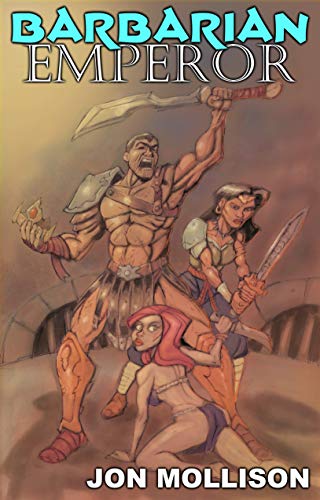
Barbarian Emperor by Jon Mollison

Alexander Macris has been posting some publicity for this volume, so I decided to give it a shot ($2.99 on Kindle), as I have been looking for something new to amuse myself for the last few months.

Superficially, it's another sword and sandal fantasy story, albeit one in an ACKS friendly setting. I bulled through the inauspicious beginning; wherein the old Barsoom trope of the hero being mysteriously translated to another world gets a trotted out. As the new setting is an ersatz-Roman Empire, it was doubly inauspicious to me, as I am extremely well read in the history of the Republic and Empire; not just having read the popular histories and even Mommsen's seminal works, but having dug up writings on demographic patterns, city planning, and Roman religion (pity Varro's books didn't survive outside of Augustine's hatchet job refutation). Since I didn't watch the series, I can't say how much the story was influenced by Spartacus: Blood and Sand; but it certainly has more to do with that than the writings of Polybius or Caesar.

Then the action started, the pace of the story picked up and the author began to weave different threads into a tapestry, every scene advancing the hero's story. The tale became increasingly more enthralling as it moved away from ersatz-Rome to a unique borderland. Pulpy like Robert E. Howard's stories but in a different, self-consistent and suitably mysterious way. Exposition of the characters thought processes provide reasonable rationales for decisions, both good and bad; and almost as importantly are concise, setting up the next action scene. No spending half a book lost in the fens outside of Mordor's front door in this story!

Three plot twists that caught me off guard. One I should have seen coming and one where I completely swallowed the hook. Well played! In the end the hero gets a girl and a crown ... and I found myself wanting to know what happens next. That to me is one of the marks of a good story, when it leaves me hungry to know what's in the next chapter.

I won't give out any spoilers, you can always drop me a line after you've read the book if you want to know what I missed until the end.

Over all, I give it four skulls out of five and recommend you pick it up for a couple of hours of light reading pleasure.

Wednesday, February 25, 2015

Book Review - Demon Princes

Been out of socket most of this month, between a cruise in the warm and a convention in Lost Wages, which wraps up tomorrow. In my travels, I've read through all five volumes of Jack Vance's Demon Princes.  These are tales of revenge set in the far future, Vance gives us tantalizing glimpses his future. The 26 planets of the Tiger Concourse, and the humorous back story on how they were named.  The workings of the ICC and the Institute, private organizations of vast influence. The Star Kings, a mysterious race of ultra competitive reptilian who may or may not have uplifted mankind.
   Yet in the end, we have hundreds of pages of vignettes, the first of the villainous Demon Princes, criminals of shocking callousness and depravity, is a Star King. After its demise, the Star Kings are erased from the universe, never to appear again.  So too the hero's love interest du jour. End of book, end of story arc, even when the hero has taken financial responsibility for them. Poof, gone, lost in the vast cosmos.
  By my count, only two characters appear on more than one story, other than the hero.  And little is done to develop any of them, including the hero. Who ticks away tracking down and assassinating these criminals one by one.  His deeds unnoticed by the galaxy and unnoticed by the remaining criminals.
It's a great, fertile setting for a space opera, read the books. Discover Smade's Planet, the Oikumene and the lawless beyond.  Have the characters s each for ore among the Darshan on Dar Sai, and let them determine if the climate is more pitiless than the people. Let them journey to far, forgotten Thamber at the edge of the galaxy or take their old Model 9B located ship to search for new worlds.
  But the stories themselves, meh.

Tuesday, October 21, 2014

Book Report - The Warrior of World's End

Lin Carter was the last of the great? pulp sci-fi/fantasy writers.  At least the last one I read with any consistency.I started picking up odd volumes of his when I was in high school, these aren't great literature, but they are (usually) fun reads.

This is the first volume of his World's End series, following the career of one Ganelon Silvermane.  Despite it being a series, the books are essentially standalone volumes. I picked up the third or fourth book in the series first and didn't find any of the others until sometime in the last five years.

Ganelon isn't a human, rather he is a construct of the mysterious Time Lords (no I don't know if Carter had been to England and caught the first Doctor on the telly, but the timeline would be right).  Released from his vault fully grown but with the mind of a new born, he is found and adopted by Phelsco the Godmaker and his wife during the Eon of the Falling Moon.

In quick order (the book is only 151 pages) he almost singlehandedly defeats a horde of 60,000 rampaging Indigons, is apprenticed to the Illusionist of Nerelon to escape being sent to serve the The Queen of Red Magic, is captured sold in slavery, escapes while rescuing the nubile Sirix Xarda, girl-knight of Jemmerdy and saves the Tigermen from the Airmasters of Sky Island and their Death Machine (all capitalized terms from the book).  It's a quick romp through a gonzo future and Ganelon's adventures are just starting.

I give it three skulls for the writing and the fourth because it consciously and conspicuously  lacks all seriousness.

Friday, June 27, 2014

What I've been reading

Not really a Book Report, but I finally updated my current reading links,  As I posted below, NPCs is definitely recommended reading for the gaming crowd.  I read The Worm Ouroboros with every intention of doing a book report on a classic in the Fantasy genre, but frankly it's all potential and no delivery to me. (I know heresy to some.)

I recently finished Theodor Mommsen's A History of Rome, Mommsen being the dean of the 19th century German Latin scholars.  I really should do a formal write up on it, but in the mean time, I need to add it to Appendix N.  It's an important resource for anyone doing a Classical campaign.

In the meantime, I've started Victor Davis Hansen's Ripples of Battle, on the recommendation of the recently discharged Marine.  Anything by VDH is worth reading, in particular for wargaming and understanding of how non-European's have viewed conflict, I recommend his Carnage and Culture.

Tuesday, June 24, 2014

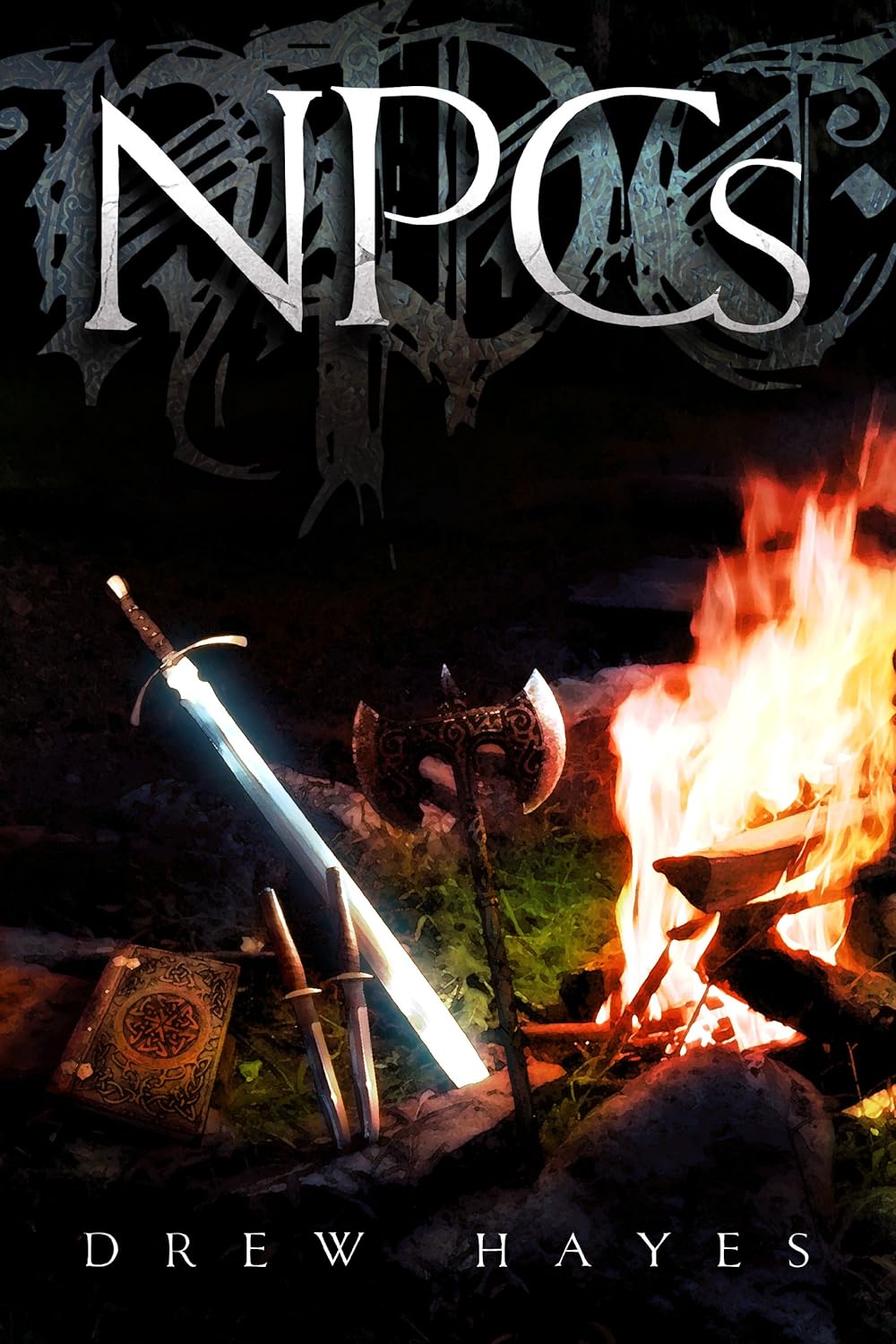
Book Report -NPCs

Picked up the ebook from Amazon over the weekend.  The story starts in the genre of the original D&D novel, Andre Norton ' s Quag Keep, where in players are transported to the fantasy world of their characters. But in this case they quickly poison themselves and all die in the first tavern they come to.
   Unfortunately, for the main characters of the story, the PCs had been tasked by the local Mad King to report in for a little job he needed to have done. The Mad King being notoriously indiscriminate about who he has killed when he doesn't get his way, the heroes decide to impersonate the dead party to save their villlage.
  The story is well written,  the characters are believable and they develop during the course of the story.  The insight on how NPCs see and interact with adventurers is refreshingly unique. The action scenes are well paced and the comment on treating royalty like toddlers made me laugh out loud. To be honest, the author does a better job of writing than Andre freaking Norton did with the same theme.
   And Grumble, the diety of minions everywhere, should be added to your pantheons immediately.
  Five skulls on this one.

Sunday, March 9, 2014

Book Review - Quag Keep

Quag Keep by Andre Norton, was as I mentioned during February's Blog Hop, the first D&D themed novel I ever read.  Indeed it is the first one ever published.  It was published in 1978, and I have the a paperback copy from the Daw September 1979 printing, which puts it right after I started college and coincidentally right after I started playing AD&D.  The book has been traveling around the country with me, thanks to the fact that most of my moving was done at the taxpayers expense.

My memory of it was that it was an unmemorable work by a major author.  It is a fairly lame premise, gamers encounter mysterious miniatures sent to 'well-known players' and are magically transported to the world of Greyhawk, where a wizard sends places them under a geas to find and oppose whoever sent them.  A bit circular but that's the premise.

The intrepid troop, travel across a recognizable version of the Flanaess; each one gets their chance to take center stage by having a unique talent/ability/possession that will get the group past this chapter's literary obstacle.  Eventually they find the eponymous castle in the middle of a swamp in the middle of the Sea of Dust where they defeat the wicked Referee, who is plotting on merging the two worlds.  Character development zero, comprehensible rational for the villain zero. Which I think is par for the course with Norton.  I read many of her works when I was younger, but never felt she was at the level of Heinlein, Asimov, Anderson or Tolkien.

Still if the plot is second rate, the individual scenes are done by a master wordsmith. She makes buying horses for the journey a scene full of background knowledge for the setting; humor and wraps up with a sense of foreboding.

I'm not a fan of any D&D setting fantasies; of the ones I've read, this one has the best writing, but the plot limits my recommendation to two skulls.


Friday, December 20, 2013

Book Report - Cthulhu in Wonderland

A Pleasant Little Offering

A. Pleasance Liddell on the sanguinary griddle,
bound to the foetid altar tight

Batrachians romp through the tenebrous swamp,
midst cacophonous Polyps in flight

The byakhee wheel in the Reticulated Reel,
dance to the cultists howling fright

Mad little Alice, in the Crimson Queen's palace,
prey to the author's sad delight.


Cthulhu in Wonderland (The Madness of Alice) by Kent David Kelly
  A retelling of Lewis Carroll's masterpiece in the Cthulhu Mythos, which as I recall, the original didn't need much in the way of Lovecraftian prose to make it confusingly verbose. (Why is it whenever I read Lovecraft, I mentally hear it being declaimed by William Shatner?) This love(craft) child of Carroll and the Master mixes both vocabularies freely and without concern for meaning or comprehension by the reader.  It is, as said in Blazing Saddles, 'authentic gibberish', a fun read but only once.

It didn't give me any inspirations for gaming, but it did inspire me to write the doggerel above.


Wednesday, March 20, 2013

Movie Review - Oz Great and Powerful

Now I go to movies when my better half tells me I'm going to the movies.  Which means that other than LoTR, where I'm already familiar with the story, I usually don't see anything related to gaming.

Oz is simultaneously a prequel, an independent story and a homage to the original Judy Garland Wizard of Oz film.  Starting with the 'cardstock' titles, which I suspect are actually CGI, the movie tries to emulate the look and feel of the films of the 1930's.  The homage  aspect starts at the beginning where the Kansas scenes are filmed in black and white, as in the original.  Oz is the traveling magician, with an assistant name 'Frank', in the 'Baum Brothers Circus'; a nice shout out to the author.  And there is a brief scene where an old flame stops by to announce that 'John Gale' has asked her to marry him, nicely foreshadowing the heroine of it's predecessor.  I'll also say that the city Oz as imagined in this film, seems to give a tip of the hat to Fritz Lang's Metropolis; which I believe carried over to the Disney castle in the credits.

I won't spoil it with too many details, the story revolves around this sideshow magician becoming the Wizard of Oz.  The story itself may be new, I  know that Baum wrote several books set in Oz, but haven't read them.  The scenery resembles that of the original, but with all the powers of CGI behind it.  The witch is wicked, the Munchkins are munchkiny and [spoiler] the flying monkeys are (mostly) baboons.  They do a nice job of not letting the audience see the monsters the wicked witch has unleashed on the poor residents of Oz, which heightens the dramatic tension.  There was one character development that I did not foresee, but which I heartily appreciated. 

Now for the gaming aspect.  After landing in the Oz, he has an encounter with 'river faeries'; these may help roll back the  Tolkien interpretation of the fae as being wonderful enlightened beings.  These are how the fae should be played, they have the sense of humor of an eight year old and they have teeth.

Baum's works are viewed (probably correctly) as geared towards juveniles, so they neglected as a source of inspiration in RPGs.  This should be revisited by DMs, the flower orchestra is a masterful piece background that tells the characters "you're not in Kansas anymore".  I suspect similar pieces exist in his works.

Finally, if you are in a game that has the Mountebank class, James Franco gives a tutorial in how to play the class.

I give Oz Great and Powerful five skulls.  Mind you, Mila Kunis would get a high skull count for looks alone, but her performance demonstrated a range that I did not suspect that she had.


Monday, March 18, 2013

Book Review - The End of the Story

Clark Ashton Smith's The End of the Story is a a chronological compilation of his work, starting from the beginning.  There are three additional volumes in the series, which I plan on covering in due course.  It's impossible to sum up a group of stories only connected by author and date of publication.  The genre jumps from story to story, Averoigne to Hyperborea to Cthulhu to hard sci-fi and the writing quality varies, as one would expect from a beginning writer, harried by multiple editors.

CAS is considered one of the authors of the canon, despite not being explicitly named in Gygax's Appendix N, as he wrote for many of the same publications as, and was a close friend of Lovecraft.

I've linked items I've been inspired to write up from his work below.  I expect more will be added later.  Obviously, I find quite a few ideas in these stories, yet they're not an easy read.  He's one of the few authors who makes me reach for a dictionary - the last one was John Marshall in his The Life of George Washington - because of his extensive and anachronistic vocabulary.

I was tempted to recommend you find a more cohesive work, say his Averoigne stories, but then I realized how much of the inspiration is coming from the other genres he worked in.

[Ed. Forgot to put in the links!]

Treasures
Goddess of the Ebon Moon 
Portal of Eibon

Beasties
Black Rider
Cactus Viper

Wednesday, January 23, 2013

eBook Report - Steam Legion

I like steampunk, I read Girl Genius regularly.  I like Roman history, look at my posts on using GIMP to make campaign maps.  I was sold at the title Steam Legion.

The author Evan Currie is (apparently) an established author of Mary Sue's.  This represents his first foray into alt-history and he is refreshingly up front in his forward that he is no historian.

He's quite right about that, he also appears to know little, and research less, about topics as diverse as geography - the Nile is noted for flowing south to north, yet his heroine moves upstream to the north. To basic engineering - going from Heron's aeolipile to a steam engine driving a wagon in less than dozen years ignores decades of work to go from open systems like the aeolipile to stationary closed systems like the Newcomen engine that didn't need a constant source of water for steam.  And another 90 years to get a practical steam carriage . Plus steam boilers are HOT, I should know as I've used them in the Persian Gulf in August.  If your character gets thrown against an unshielded boiler, even a non-pressurized one, they are badly burned,  not charging into a battle five pages later.  That's assuming that an unwelded metal boiler wouldn't spring a leak the first time it hit a pothole in a wagon with no suspension.  If you want a believable description of how to use an aeolipile to power a vehicle, read Terry Pratchett's Small Gods.

The description of the Roman military and society is also execrable.  The Auxillia weren't a system of military reserves, they were non-Roman citizen units, often cavalry, or archers, although they were originally non-Roman troops of any sort.  They lost a legion, they raised a legion.  They did have colonies of retired soldiers planted in many lands, which could be called to arms.  But the difference between light infantry (peltasts) and heavy infantry (legionnaires) is a matter of training more than equipment.  The Romans most emphatically did not use the phalanx.  The phalanx was a formation of spear men, really pikes. The Romans, as he describes quite realistically, fought with pilium (javelin) and short swords, the infamous gladius hispanica.

I also had to wonder where did his Zealot commanders get such good training and communication systems?  He depicted them as being immune to the fog of war.

  His description of the Emperor Nero is idiosyncratic to say the least and I actually found the plot that he was being slowly poisoned humorous as Nero was widely considered to have used poison to off his dear uncle the Emperor Claudius.

Ok, I really ripped the setting.  But I'll also say that the writing was pretty good overall, I found the characters of the Centurion Cassius and Tribune Gordian compellingly believable and I think if the author had had an editor the overall story would have been worth reading.  I probably would have recommended it in that case.  But as it is -

Tuesday, December 25, 2012

Book Report - Mazirian the Magician

   A big part of our canon, this is the retitled Dying Earth stories by Jack Vance, included in the original Appendix N.  Along with the titular story it contains Turjan of Miir, T'sais, Laine the Wayfarer, Ulan Dhor Ends a Dream and Guyal of Sfere.
  I have to admit this is the first time I've read it, I never found Vance's works before. When I was younger my reading turned more to Heinlein and hard science fiction, than to fantasy.
  The stories themselves share a common setting, and are loosely linked. Turjan was Mazirian's prisoner, and was freed by T'sais' sister T'sain.  In Turjan's prequel, he steals an item from Prince Kandive the Golden, uncle to Ulan Dhor. T'sais has an encounter with Laine, which sets up the reader to applaud Laine's subsequent demise.  Guyal merely passes through the landscape sketched by the previous stories on his journey to knowledge and perhaps wisdom.

  Inspirations:  It's all here Vancian magic, strange monsters, mighty wizards, devil-may-care rogues.  These stories are what Gygax and Arneson were trying to recreate when they brought role playing to life.

Read it if you haven't already.

Monday, December 17, 2012

Book Report - Moving Pictures

Moving Pictures is the tenth novel in Pratchett's acclaimed Discworld series.  It's hard to categorize within the Discworld canon, it can be considered part of the Rincewind/Unseen University stories.  Yet the main characters, other than Gaspode the Wonder Dog don't recur in the later Discworld volumes.  This would also be the first time in those stories where Rincewind doesn't appear.

     The supporting cast is familiar and well loved, C.M.O.T Dibbler, the Patrician and Death appear and, in Dibbler's case, attempts to sell the show he has just stolen.  The faculty of the Unseen University is being to assume it's mature identity.  Mustrum Ridcully makes his appearance as the Archchancellor, although in a less polished incarnation.  This event ended the oft alluded to, and occasionally seen, practice of succession to that position "via the dead man's pointy shoes."  The Bursar is beginning to have his nervous breakdown and the rest of the faculty has been reduced from personal names to titles.  The wizards have also gone from devious and scheming to fat and comic.  The Patrician seems to have slimmed down from his corpulence in the Colour of Magic towards Vetinari's spare frame.

     The story hits more memes from Hollywood than I can enumerate, the downside of them is that they leave me with a vague sense that the story was pieced together to around them rather than naturally including them.

Inspirations:
      The basic plot is saving the world from creatures with out.  In Discworld reality is always under siege by "creatures from the Dungeon Dimensions", Moving Pictures has some very evocative scenes of these creatures intruding.  It's a good chance to break out the "Random Creatures from the Lower Planes" tables in the back of the 1e DMG.

     The description of the "Cthinema" under the hill, with it's screen like a pool of quicksilver turned on edge and seats full of undead would make an off beat mystery for players.

     The effects of the clicks on the local population, it's easy to stop a villain, but how do you stop an idea?  Is there a hidden mastermind behind the fad sweeping the area, or is it the fad itself that's contagious?

      The idea that an unknown force is granting sentience to individual animals, is this where familiars come from?

     Dead man's pointy shoes - the PCs must either take out a high level wizard for their patron to advance or protect their patron from assassination.

Plot: Read the book, it's Discworld, you'll enjoy it.