Magic users come in three varieties - (1) new, poor and feeble, (2) dead or (3) rich and powerful. All of them start in the first category and hope to avoid the second while advancing to the third. Those who make it to the third category are also very intelligent and, having pursued the same path to wealth and comfort, understand that their fortune is a magnet to the first category and other undesirable types.
With this in mind they put in a great deal of thought and effort into designing traps and safeguards to protect the treasures that they have accumulated (stolen) at great personal risk. Those of a more humorous frame of mind enjoy using the following spell to identify and capture less successful miscreants.
The Basyn Spell
Arcane 4
Range: Touch
Duration: Special
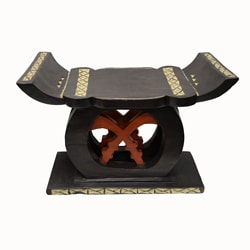
This spell is cast on a single non-magical object no larger than a footstool. The spell is completed when the object is placed in it's intended location. Once placed, anyone who picks up or grasps the object can not let go of it until the spell is dispelled. Furthermore, once someone has been grasped the object, anyone else who grasps or touches the object or a creature touching the object (ad inifinitum) is also unable to let go. This secondary effect extends to tools used to touch the object or creature. For instance, attempting to smash the object with a hammer would cause the hammer to stick to the object, while the wielder of the hammer could not let go of it in turn. Any number of creatures may be effected.
The caster sets the requirements for dispelling the magic as part of the spell. It may be a word or phrase; or it may be the object being used in a particular manner or by a named individual. For instance, they can't let go until the magic user had put his feet up on the footstool.
The nickname of the spell comes from the actions of a group of thieves trying to tug it out of each other's grasp resembles them dancing around it.
Showing posts with label Traps. Show all posts
Friday, May 23, 2014
Saturday, December 21, 2013
Trapping 101 - Reboot
Looking back at my post on the Portcullis - it blows. I'm going to start over on the series. But coherently this time.
The Thief class goes back to Supplement I - Greyhawk in 1976, with the ability to "Disarm Traps". Note that it didn't address finding them, but it's assumed that you can find them if you can disarm them. Now when it comes to DMing, I'm the type who needs to think out the descriptions in advance, I suck at making up details on the fly. So the question I wanted to answer was - when the die roll says they found the trap, what have they actually found?
I doubt that it's a sign that says "TRAP". Instead it must be something that indicates there's trap there. They may have found the trap, i.e. the pit trap may be standing open; but it's more likely that what they've actually found is evidence of the trap. A suspicious patch of floor or an oddly regular hole in the wall. Or they may have found the trigger mechanism, a trip cord or lever or something. Or the crushed skull and bones of the last victim.
So what I did was list the physical evidence you might encounter for a particular type of trap;how it might be triggered and the evidence that the trigger would leave. That becomes the result of the "Detect Trap" die roll.
In making the lists, I found a serendipitous bonus - many of the traps not only use the same trigger mechanisms, but also are physically similar, so that just describing what they've found does not necessarily let the party know what the trap is.
Analyzing the lists, I came to a few conclusions. Traps can be categorized by effect, allowing me to weight what type of trap is there.
Channeling - Traps that prevent/require the characters to move along certain paths. (Chutes, Portcullises)
Deadfalls - Traps that drop something
Pit traps - Holes that things fall into
Spells - Traps that involve magical effects
Weapons - Traps that swing a blade or club or fire a missile
Reasonable trap and trigger combinations are dependent on the object trapped. A door could have a pit trap or a poison needle associated with it. A corridor could have a pit trap, but the poison needle trap doesn't make any sense in that location.
So for each type of object trapped I listed the possible triggers
Space
Stepping on a lever
Stepping on a trap
Pulling a tripwire
Reading a glyph
Being observed (command activated)
Door
Pulling a tripwire
Reading a glyph
Being observed (command activated)
Opening
Closing
Passing through
Locking
Unlocking
Container
Pulling a tripwire
Reading a glyph
Being observed (command activated)
Opening
Closing
Locking
Unlocking
Moving
Now that I have all this information I can put together random tables to generate the trap, trigger and what the party observes when they find it. That will be the subject of my next post on the subject.
The Thief class goes back to Supplement I - Greyhawk in 1976, with the ability to "Disarm Traps". Note that it didn't address finding them, but it's assumed that you can find them if you can disarm them. Now when it comes to DMing, I'm the type who needs to think out the descriptions in advance, I suck at making up details on the fly. So the question I wanted to answer was - when the die roll says they found the trap, what have they actually found?
I doubt that it's a sign that says "TRAP". Instead it must be something that indicates there's trap there. They may have found the trap, i.e. the pit trap may be standing open; but it's more likely that what they've actually found is evidence of the trap. A suspicious patch of floor or an oddly regular hole in the wall. Or they may have found the trigger mechanism, a trip cord or lever or something. Or the crushed skull and bones of the last victim.
So what I did was list the physical evidence you might encounter for a particular type of trap;how it might be triggered and the evidence that the trigger would leave. That becomes the result of the "Detect Trap" die roll.
In making the lists, I found a serendipitous bonus - many of the traps not only use the same trigger mechanisms, but also are physically similar, so that just describing what they've found does not necessarily let the party know what the trap is.
Analyzing the lists, I came to a few conclusions. Traps can be categorized by effect, allowing me to weight what type of trap is there.
Channeling - Traps that prevent/require the characters to move along certain paths. (Chutes, Portcullises)
Deadfalls - Traps that drop something
Pit traps - Holes that things fall into
Spells - Traps that involve magical effects
Weapons - Traps that swing a blade or club or fire a missile
Reasonable trap and trigger combinations are dependent on the object trapped. A door could have a pit trap or a poison needle associated with it. A corridor could have a pit trap, but the poison needle trap doesn't make any sense in that location.
So for each type of object trapped I listed the possible triggers
Space
Stepping on a lever
Stepping on a trap
Pulling a tripwire
Reading a glyph
Being observed (command activated)
Door
Pulling a tripwire
Reading a glyph
Being observed (command activated)
Opening
Closing
Passing through
Locking
Unlocking
Container
Pulling a tripwire
Reading a glyph
Being observed (command activated)
Opening
Closing
Locking
Unlocking
Moving
Now that I have all this information I can put together random tables to generate the trap, trigger and what the party observes when they find it. That will be the subject of my next post on the subject.
Friday, March 8, 2013
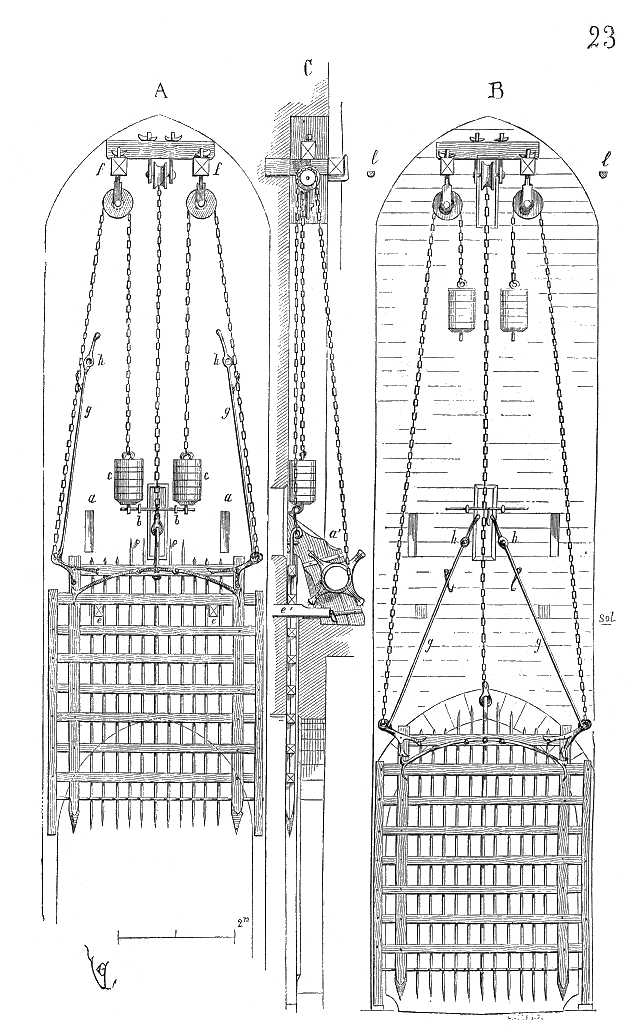
Trapping 101 - The Portcullis
One of the factors that kindled my interest in the OSR movement (the term itself being a matter for debate) was a sense of dissatisfaction with the plethora of skill checks 3.x brought into my life. I'm lousy at coming up with off the cuff descriptions of the players actions, what does it mean when they rolled and found a trap?
So I reached for my trusty IDE (MS Visual Studio at the time) and coded me some trap descriptions - including defining the trigger mechanism and what the characters might notice - when and if they detect the trap.
There are many different types of traps, but since I was coding it I started by grouping traps by type, mostly so that I could weight the occurrence of each type within the dungeon and by challenge rating (3.x remember).
.
Trap Type - D100
01-05 Spells - Traps that involve magical effects
06-20 Weapons - Traps that swing a blade or club or fire a missile
21-40 Deadfalls - Traps that drop something
41-65 Channeling - Traps that prevent/require the characters to move along certain paths. (Chutes, Portcullises)
66-00 Pit traps - Word of advice from my players "Don't ask the cleric to open the chest. She can't heal herself afterwards."
For each type I then determine what the characters might notice about the trap itself. Using a portcullis for an example:
1. They see a row of evenly spaced chips in the floor
2. They spot a thin gap in the ceiling
4-6 They spot the trigger.
Portcullis Triggers
1. They see a small raised area of the floor about 7cm square. [Stepping on the lever triggers the trap]
2. They feel the floor start to give under their foot. [Stepping on the lever triggers the trap]
3. They see a thin cord stretched across the floor. [Pulling a tripwire triggers the trap]
4. They see a thin wire stretched across the floor. [Pulling a tripwire triggers the trap]
5. They feel a resistance at ankle level. [Pulling a tripwire triggers the trap]
6. They spot a creature that looks like a greyish brown fried egg on the wall. [It's a Trap Limpet - a magical construct that can trigger and reset a trap. It will be a forthcoming Beastiary entry.]
7. As they lift the container, they feel it being pushed higher by an unseen force. [Moving the container triggers the trap]
8. The container rests on a small pedestal. [Moving the container triggers the trap]
Oh, and despite my categorizing it as 'Channeling', I did kill a character with one once, when the thief failed to find it, it dropped on the guy fifth in line behind him. Cause of death - multiple BIG stab wounds.
I'll walk through more traps, triggers and what they see in further posts. If you have suggestions to add for triggers and observations, please leave them in the comments.
Subscribe to:
Posts (Atom)