There is a very good post on Light Age vs Dark Age civilizations over at Hack & Slash. He calls out the distinctions between civilizations ascending and descending the heights of power (Light Age) and those wallowing in the troughs between the heights.
I've been having some thoughts about using Medieval Italy as a template for a fantasy setting and at this point I'm fascinated by the number of cultures that were intertwined. The original cultural distinctions between Latin, Samnite, Etruscan, Umbrian, Greek and Gaul had been blended into the Imperial Roman culture (Light Age). The Lombards, mercenaries in Rome's pay, destroyed the western empire and set up their duchies. Which controlled the countryside, but not the cities. The cities set up their own forms over government based on the old Roman forms, the Bishop's were often very influential in the cities. The Goths came in to overthrow the Lombards, the Byzantines invaded under Belisaurius and Narses to restore the Empire, the Saracens took Sicily. That's six layers and we're still not up to Charlemagne. Add in the French, Germans, Normans and Spanish and you'll begin to see why the Renaissance was so rich in Italy as they had so many cultures to draw upon as they reascended the heights - as well as why a man could betray himself by the way he ate his peas.
My conclusion is that building a good setting is like painting, you need to blend and layer colors and cultures in order to develop a rich, realistic work of art.
Monday, January 20, 2014
Saturday, January 18, 2014
D&D 40th Anniversary Blog Hop Challenge
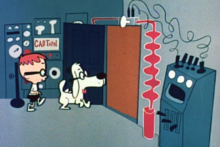
| The original WABAC Machine |
http://d20darkages.blogspot.com/p/d-40th-anniversary-blog-hop-challenge.html
Friday, January 17, 2014
Insanity Cures
Driving in to work with the full moon in the west and the first pangs of cabin fever caused by yet another long Midwestern winter reminded me that I need to finish off my series on Insanity and Insane Lists by writing up the ways in which characters can be cured of their afflictions.
There are three ways characters can try to over come an insanity, each affliction needs to be treated separately. The ways are therapy, alchemy and magic. Keep in mind that the cure is often worse than the disease.
Therapy in a fantasy setting is only available in the form of 'aversion therapy'. Negative stimulus is applied to the character by thethug therapist whenever the character engages in the objectionable behavior. In other words the character hires someone to beat them with a stick whenever the insanity kicks in. All damage inflicted is subdual damage. Each 'treatment' has a 1% chance of curing the character of the affliction for each point of damage inflicted. The chance of a cure is halved for Serious Disabilities and therapy is ineffective in treating Disabling Disorders. The character must heal completely between sessions.
Alchemy offers the hope of temporarily alleviating the symptoms through pills, powders and potions. First one must find an alchemist who isn't working on the whole lead to gold issue. To find the effect of the potion, the character rolls a Constitution check and consults the table below. Note that alchemists are always tinkering with their formulas, so each batch they make will have separate effects. There are 2d4 doses in each batch.
Magic seems to offer the most reliable or the least painful way of curing insanity, but there are severe limitations. Few arcane spells deal with curing, at the DM's option reversed arcane spells, such as Feeble Mind and Confusion will alleviate specific types of insanity for the duration of the spell.
Divine spells will take care of Insanity, Restoration will cure one affliction for each casting. But insane characters marked as having been 'touched by the gods'; and deities are wary of crossing each other's will. Most deities will not allow their servants to remove Insanity immediately . The case of exemplary worshippers is an obvious exception. Of course when a high level cleric or paladin becomes insane, it's a good indication that they have gathered a supernatural enemy.
The safest way to have the affliction removed is to perform a divination to determine which deity inflicted the insanity, then go to that temple of that deity to have the affliction lifted. This will almost certainly involve the character performing a quest.
Wishes can cure insanity, but because of the divine nature of the affliction the wording should be creatively interpreted by the DM. For example, wishing to remove Serious Acrophobia could leave the character so fond of heights that they insist on walking on stilts.
There are three ways characters can try to over come an insanity, each affliction needs to be treated separately. The ways are therapy, alchemy and magic. Keep in mind that the cure is often worse than the disease.
Therapy in a fantasy setting is only available in the form of 'aversion therapy'. Negative stimulus is applied to the character by the
Alchemy offers the hope of temporarily alleviating the symptoms through pills, powders and potions. First one must find an alchemist who isn't working on the whole lead to gold issue. To find the effect of the potion, the character rolls a Constitution check and consults the table below. Note that alchemists are always tinkering with their formulas, so each batch they make will have separate effects. There are 2d4 doses in each batch.
| Severity | Poison | Dose lasts for | Cost |
|---|---|---|---|
| Eccentricity | 1: No effect and character becomes addicted. 2: Works, but the character becomes addicted. 3: No effect, character is Sickened for 1d6 hours 4: No effect, character is Sickened for 1d6 * 10 minutes 5-12: No effect 13: Works, duration is halved 14: Works, character is Sickened for 2d6 minutes 15+ Works 20+ Works, duration is doubled Natural 20: Permanent Cure |
1 week | 10 GP |
| Minor Disorder | 1: No effect and character becomes addicted. 2: Works, but the character becomes addicted. 3: No effect, character is Sickened for 2d6 hours 4: No effect, character is Sickened for 3d6 * 10 minutes 5-14: No effect 15: Works, duration is halved 16: Works, character is Sickened for 2d6 minutes 17+ Works 22+ Works, duration is doubled Natural 20: Roll again 10+ Permanent Cure |
1 day | 100 GP |
| Serious Disorder | 1: No effect and character becomes addicted. 2: Works, but the character becomes addicted. 3: No effect, character is Comatose for 1d6 hours 4: No effect, character is Sickened for 2d6 hours 5-16: No effect 17: Works, duration is halved 18: Works, character is Sickened for 2d6 minutes 19+ Works 24+ Works, duration is doubled Natural 20: Roll again 15+ Permanent Cure |
1 hour | 250 GP |
| Disabling Disorder | 1: No effect and character becomes addicted. 2: Works, but the character becomes addicted. 3: No effect, character is Comatose for 1d6 days 4: No effect, character is Sickened for 3d6 hours 5-17: No effect 18: Works, duration is halved 19: Works, character is Sickened for 2d6 minutes 20+ Works Natural 20: Roll again Natural 20: Permanent Cure |
1d6 * 10 minutes | 1000 GP |
Magic seems to offer the most reliable or the least painful way of curing insanity, but there are severe limitations. Few arcane spells deal with curing, at the DM's option reversed arcane spells, such as Feeble Mind and Confusion will alleviate specific types of insanity for the duration of the spell.
Divine spells will take care of Insanity, Restoration will cure one affliction for each casting. But insane characters marked as having been 'touched by the gods'; and deities are wary of crossing each other's will. Most deities will not allow their servants to remove Insanity immediately . The case of exemplary worshippers is an obvious exception. Of course when a high level cleric or paladin becomes insane, it's a good indication that they have gathered a supernatural enemy.
The safest way to have the affliction removed is to perform a divination to determine which deity inflicted the insanity, then go to that temple of that deity to have the affliction lifted. This will almost certainly involve the character performing a quest.
Wishes can cure insanity, but because of the divine nature of the affliction the wording should be creatively interpreted by the DM. For example, wishing to remove Serious Acrophobia could leave the character so fond of heights that they insist on walking on stilts.
Insane Lists
As promised earlier, here are the lists of Insanities and how they effect the characters. They've been culled from such authoritative texts as Chivalry & Sorcery, Warhammer FRP and Call of Cthulhu.
All penalties are cumulative.
Eccentricities
Minor afflictions that add color| Die Roll (d100) | Name | Description |
|---|---|---|
| 01 – 08 | Absent Minded | The character misplaces one random item per day. They must take 20 in order to find it. |
| 09 – 16 | Allergy | The character sneezes in the presence of or develops a rash from touching a common substance or animal |
| 17 – 24 | Biting Fingernails | The character bites their fingernails constantly |
| 24 – 32 | Headaches | The character suffers from blinding headaches. These headaches are brought on whenever the character needs to make a Will test. Whether or not they succeed or fail the original test, they must make another test at the same DC-2 or develop a headache for 1 hour. During the course of the headache, they are at -4 on all saves, attacks, skill checks and initiative. The good news is that they're so mad they get +2 to hand weapon damage rolls |
| 33 -40 | Narcissism | The character is so in love with their own image that every time they pass a reflecting surface, they must make a Will save DC16 or spend 1d4+2 rounds primping |
| 41 – 52 | Nervous Rash | The character develops a rash. Roll d6: 1-2 on the face or hand lowering Charisma by 2. 3-5 Chest or back, not effect as long as they wear clothing. 6 Groin – and it itches all the time |
| 63 – 60 | Nightmares | The character suffers from nightmares. This has no effect on the character, but any spell casters trying to sleep in the same or adjacent rooms must make a Will save DC14 or be unable to recover spells |
| 61 – 68 | Shaking | The character develops tremoring in the hands. Ranged attacks are at -2 and there is a 5% chance of spell casting failure. Arcane and Divine |
| 69 – 76 | Stammer | The character stutters like Eric Idle in A Fish Called Wanda. 10% chance of spell caster failure.Arcane and Divine |
| 77 – 84 | Talking in Sleep | The character talks in their sleep.This has no effect on the character, but any spell casters trying to sleep in the same or adjacent rooms must make a Will save DC12 or be unable to recover spells |
| 85 – 92 | Talking to Self | The character talks to themselves constantly. Opponents get a +1 on Perception checks |
| 93 – 00 | Tourrette's Syndrome | The character cannot say six words without cursing. Charisma -2. (-4 with the opposite sex) |
Minor Disorders
Behaviors that provide a minor disadvantage to the character.| Die Roll (d100) | Name | Description |
|---|---|---|
| 01 – 05 | Introversion | The character becomes painfully shy and self centered. Charisma is -2 |
| 06 – 10 | Mild Acrophobia | The character is afraid of heights and makes Will saves at -2 when standing less than their height away from a ledge with a drop at least equal to their height |
| 11 – 15 | Mild Addiction | The character develops a chemical dependence on a substance; usually alchohol, but tobacco, coffee or any smoked or ingested substance is possible. Whenever the character goes with out the substance for 24 hours, they make Will saves at -2 |
| 16 – 20 | Mild Agoraphobia | The character is afraid of open spaces and makes Will saves at -2 whenever out of doors |
| 21 – 25 | Mild Ailurophobia | The character is afraid of cats and makes Will saves at -2 in their presence |
| 26 – 30 | Mild Animosity | The character harbors ill will towards a specific group. Roll d6: 1- Opposite Sex; 2- Same Sex; 3- Specific Race; 4 – Shorter creatures; 5- Specific religion or other group; 6 – Gingers. Charisma is at -2 when dealing with the object of the animosity |
| 31 – 35 | Mild Aracnopohbia | The character is afraid of spiders and makes Will saves at -2 in their presence |
| 36 – 40 | Mild Astrophobia | The character is afraid of thunder and lightning and makes Will saves at -2 during thunderstorms |
| 41 – 45 | Mild Claustrophobia | The character is afraid of confined spaces (Any dimesion less than twice their height * the number of cratures in the room) and makes Will saves at -2 whenever in such a space |
| 46 – 50 | Mild Cynophobia | The character is afraid of dogs and makes Will saves at -2 in their presence |
| 51 – 55 | Mild Hemophobia | The character is afraid of blood and makes Will saves at -2 iwhen they can see it |
| 56 – 60 | Mild Heptephobia | The character is afraid of being touched and makes Will saves at -2 when within 3 feet of another creature |
| 61 – 65 | Mild Hippophobia | The character is afraid of horses and makes Will saves at -2 in their presence |
| 66 – 70 | Mild Hydrophobia | The character is afraid of water and never bathes. Charisma -4 or -2 if they use perfumes |
| 71 – 75 | Mild Hypochondria | The character is convinced they are becoming ill and spends their level in glod pieces daily on cures and nostrums |
| 76 – 80 | Mild Musophobia | The character is afraid of mice and makes Will saves at -2 in their presence |
| 81 – 85 | Mild Ophidiophobia | The character is afraid of snakes and makes Will saves at -2 in their presence |
| 86 – 90 | Mild Scotophobia | The character is afraid of the dark and makes Will saves at -2 when without a source of light |
| 91 – 95 | Mild Toxicophobia | The character is afraid of poison and must make a Will save DC 14 to eat any food not prepared by themselves or tasted by another |
| 96 – 00 | Mild Xenophobia | The character is afraid of strangers and has a -2 Charisma penalty when dealing with people they have not met |
Serious Disorders
Issues that will change how the character acts| Die Roll (d100) | Name | Description |
|---|---|---|
| 01 – 04 | Depression | In the face of the overwhelming futility that is life, the character must make a Will save DC 15 to make any decision. Charisma -4 |
| 05 – 08 | Heroic Idiocy | The character ignores all fear affects and must make a Will save DC the opponents total hit dice to resist immediately attacking |
| 09 – 12 | Kleptomania | The character comulsively tries to steal trinkets and small objects and must make a Will save DC 20 to resist the impulse |
| 13 – 15 | Megalomania | The character is full of their own importance in the world and will stop at nothing to increase their power. |
| 16 – 19 | Schizophrenia | The character develops a separate personality, with individual Intellligence, Wisdom and Charisma stats. Randomly determine the new personality's alignment and career interests. The personalities switch whenever a Will save is failed. Experience must be split evenly between all personalities |
| 20 – 23 | Serious Acrophobia | The character is afraid of heights and makes Will saves at -6 when standing less than their height away from a ledge with a drop at least equal to their height |
| 24 – 27 | Serious Addiction | The character develops a chemical dependence on a substance; usually alchohol, but tobacco, coffee or any smoked or ingested substance is possible. Whenever the character goes with out the substance for 24 hours, they make Will saves at -6 |
| 28 – 30 | Serious Agoraphobia | The character is afraid of open spaces and makes Will saves at -6 whenever out of doors |
| 31 – 34 | Serious Ailurophobia | The character is afraid of cats and makes Will saves at -6 in their presence In any encounter invloving the creature, the character is initially petrified and will always be Surprised. |
| 35 – 38 | Serious Animosity | The character harbors ill will towards a specific group. Roll d6: 1- Opposite Sex; 2- Same Sex; 3- Specific Race; 4 – Shorter creatures; 5- Specific religion or other group; 6 – Gingers. Charisma is at -6 when dealing with the object of the animosity |
| 39 – 42 | Serious Aracnopohbia | The character is afraid of spiders and makes Will saves at -6 in their presence In any encounter invloving the creature, the character is initially petrified and will always be Surprised. |
| 43 – 45 | Serious Astrophobia | The character is afraid of thunder and lightning and makes Will saves at -6 during thunderstorms |
| 46 – 49 | Serious Claustrophobia | The character is afraid of confined spaces (Any dimesion less than twice their height * the number of cratures in the room) and makes Will saves at -6 whenever in such a space |
| 50 – 53 | Serious Cynophobia | The character is afraid of dogs and makes Will saves at -6 in their presence In any encounter invloving the creature, the character is initially petrified and will always be Surprised. |
| 54 – 57 | Serious Hemophobia | The character is afraid of blood and makes Will saves at -6 iwhen they can see it |
| 58 – 60 | Serious Heptephobia | The character is afraid of being touched and makes Will saves at -6 when within 3 feet of another creature |
| 61 – 64 | Serious Hippophobia | The character is afraid of horses and makes Will saves at -6 in their presence. In any encounter invloving the creature, the character is initially petrified and will always be Surprised. |
| 65 – 68 | Serious Hydrophobia | The character is afraid of water and never bathes. Charisma -4 or -2 if they use perfumes. The character makes Will saves at -4 when near a large body of water |
| 69 – 72 | Serious Hypochondria | The character is convinced they are becoming ill and spends twice their level in glod pieces daily on cures and nostrums |
| 73 -75 | Serious Introversion | The character becomes painfully shy and self centered. Charisma is -6 |
| 76 – 79 | Serious Kleptomania | The character comulsively tries to steal trinkets and small objects and must make a Will save DC 20 to resist the impulse |
| 80 – 83 | Serious Musophobia | The character is afraid of mice and makes Will saves at -6 in their presence In any encounter invloving the creature, the character is initially petrified and will always be Surprised. |
| 84 – 87 | Serious Ophidiophobia | The character is afraid of snakes and makes Will saves at -6 in their presence In any encounter invloving the creature, the character is initially petrified and will always be Surprised. |
| 88 – 91 | Serious Scotophobia | The character is afraid of the dark and makes Will saves at -6 when without a source of light |
| 92 – 95 | Serious Toxicophobia | The character is afraid of poison and must make a Will save DC 14 to eat any food not prepared by themselves or tasted by another |
| 96 – 00 | Serious Xenophobia | The character is afraid of strangers and has a -6 Charisma penalty when dealing with people they have not met. In any encounter invloving the creature, the character is initially petrified and will always be Surprised. |
Debilitating Disorders
Issues that prevent normal movement and adventuring| Die Roll (d100) | Name | Description |
|---|---|---|
| 01 – 19 | Amnesia | The character loses all memories |
| 19 – 25 | Catatonia | The character is immobile and unresponsive, literally frozen in position. They may be carried. |
| 26 – 38 | Pantophobia | The character is afraid of everything, and jumps and starts continually. They make all Will saves at -8. |
| 39 – 57 | Paranoia | Not necessarily an issue for many characters, because the DM is out to get them. |
| 58 – 71 | Severe Agoraphobia | The character is so afraid of open spaces that they refuse to venture outdoors |
| 72 – 85 | Severe Claustrophobia | The character is so afraid of enclosed spaces that they refuse to venture indoor |
| 86 – 100 | Stupefication | The character stands drooling and babbling inchoerently. They may be led, but will take no self directed actions |
Thursday, January 16, 2014
Beer Review - 3rd Street Maple Stout
Went to the gym tonight, then proceeded to blow the workout by getting a burger and beer. 3rd Street Maple Stout, 3rd Street Brewing, Cold Spring MN. Nice roasted malt flavor with a definite maple finish. It lives up to it's name, I'm glad I tried it and I'll look for others by this brewer. But I won't buy a six pack. The maple flavor got to be a little too much by the end.
Wednesday, January 15, 2014
On Constructing Random Lists
I've published couple of random lists recently. Which is a bit of a change from last year, when I would have thrown them into JavaScript and put them on the Utilities page. Stellios over at d20DarkAges suggested in the comments that I could work in the entries from the Random Creatures from the Lower Planes table out of the 1e DMG to the 236 Mutations table. His suggestion is worth a response as to why I won't be doing it any time soon.
If you look at the Utilities page, you'll see that they're just random generators at the heart no different from the mutation and insanity lists I published. And I construct them in the same manner, that is I look at all the entries I have and then I start grouping them into categories. The type of category, whether the what body part is mutated or what type of creature may be encountered doesn't matter, at this step I'm establishing a base chance that a something n that category is encountered. In the case of mutations, I decided that I wanted hybrid crossbreeds to appear about 15% of the time, other visible physical mutations about 60% and unseen mental or other mutations the remainder.
I then establish subgroups and weight their probability as needed within those categories. At this point since I have something specific in mind, like adding wings, I start thinking of every possibilty related to that that I can think of. It's one thing to find bat wings in a list, but why not chicken wings? And if they're there what do they do? This is where the actual content is determined.
The final step is to put probabilities by each entry and make them add up to 100%. Some movement of the group percentages occurs to ensure that the individual entries occur in the desired frequency, that's how hybrids ended up at 16.3% of the list.
Now, when you're programming it's trivial to keep the category and subgroup ratios constant as you add individual entries. But it's a non-trivial challenge with a list. You can do it with multiple tables, but to me the point of the list is to quickly and easily generate a result. On the ridiculous end I could see you rolling on seven tables to generate a mutant with red and green plaid eyeballs; but I don't see anyone wanting to. So as a design choice I keep the lists flat, preferably a single list if I can, to let the user roll and go.
The other design choice is how many entries are in the list? Obviously it's bounded by the maximum die roll, which in turn is set as the minimum power of 10 which includes the total number of entries. A little recursive, but trust me on it. Adding, for example, plaid eyeballs into the table while keeping the category and subgroup proportions consistent, requires recalculating at least every entry under Physical Mutations -> Head OR, more likely as there are are many entries in the 1e DMG tables, increasing the die roll from d1000 to d10,000 and recalculating every probability in the lists.
So while I'm not planing on expanding the list, if I do put Mutations on the Utilities page, I'll include the 1e tables and the plaid eyeballs.
Monday, January 13, 2014
Forgotten Gem - Metamorphosis Alpha
Metamorphosis Alpha was science fiction role playing game written by James M Ward and published by TSR Rules in 1976. It is also one of the first two RPGs I ever purchased, I found my copy this summer cleaning the basement.
In just 32 - 8 1/2 x 11 double column pages it gave you a complete role playing system, similar but different from D&D. Still based on 3d6, the character attributes were Radiation Resistance, Mental Resistance, Dexterity, Strength, Leadership Potential and Constitution. Characters can be basic humans, mutated humanoids or mutated animals or plants. Mutants don't have Leadership Potential
Radiation Resistance and Mental resistance both used cross index charts comparing the power of the attack against the character's resistance to determine damage. Here we're seeing one of the roots of the hobby, as similar charts were used in hex and counter board wargames of that era.
Poison vs Constitution used a similar chart.
Rules and examples of character generation take up about two and a half pages - including an illustration.
When you consider that the rest of the pages give descriptions of every deck of a 50 mile long starship, lists of mutations, a beastiary with mutated humans, animals and plants and lists of technological treasures, this game is pretty much the epitome of 'rules light'.
I only played it a few times in high school, but the player rewards in terms of advancement just weren't there. You could gain access to technology, such as robots, and wander around the starship, but unlike Heinlein's Orphan's in the Sky, there was no set goal of achieving control of the ship. Not being an experienced game master, the system was just too open ended for me to continue with. So it's been in storage for several decades awaiting for me to level up as a DM.
On a side note the 1e DMG has rules for running a cross over with Metamorphosis Alpha.
[Ed. - forgot to ask: Any of you get to play this one?]
Subscribe to:
Posts (Atom)